Immune & Thymic Research Peptides
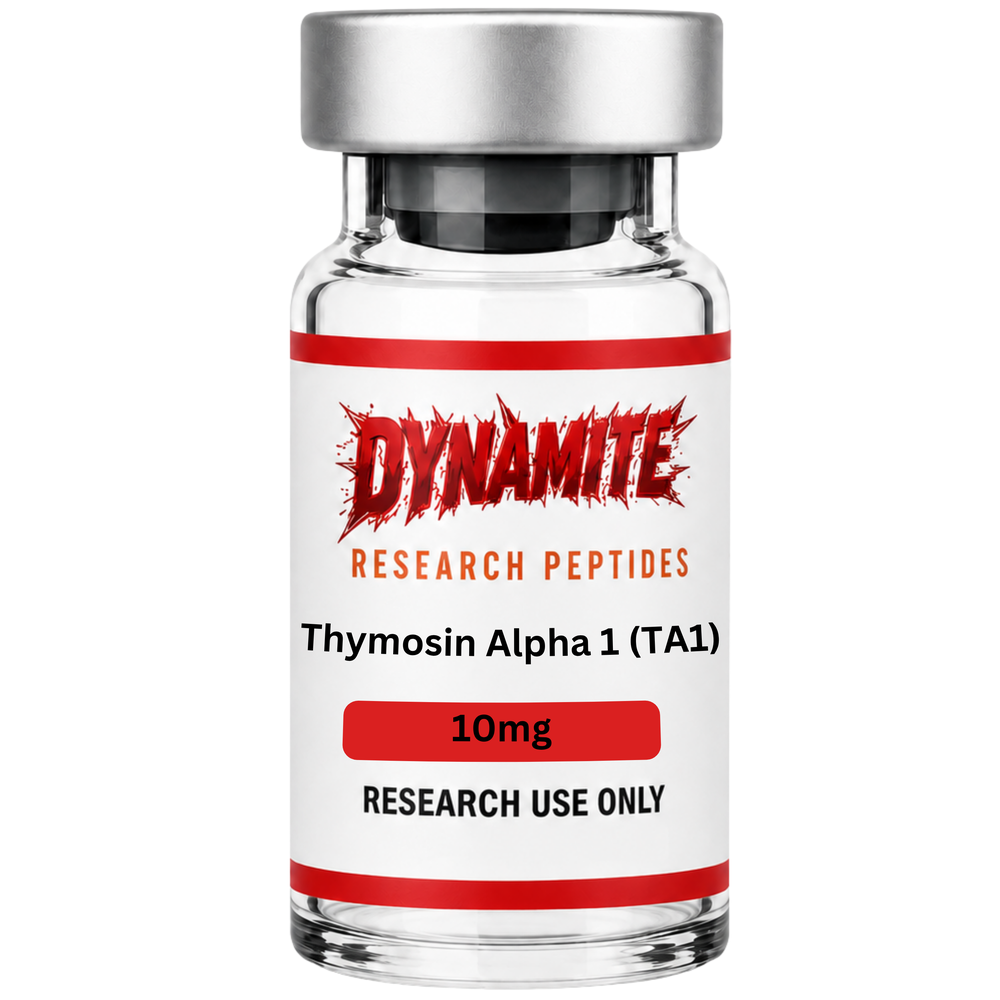
Immune and thymic research peptides are studied for their roles in T-cell maturation, dendritic-cell signaling, and innate immunity. Thymosin Alpha-1 (Tα1) is the most extensively characterized: it acts on Toll-like-receptor signaling in dendritic cells (TLR9 → MyD88 pathway) to influence T-cell polarization and regulatory-T-cell expansion. A comprehensive review reports that Tα1 has been evaluated across more than 80 clinical trials in over 4,400 patients spanning antiviral, oncology-adjunct, and immunodeficiency research settings.
The category also includes Thymalin, a thymic-peptide preparation studied for neuroendocrine-immune interactions, and LL-37, a human cathelicidin antimicrobial peptide studied in innate-immunity and angiogenesis models. These compounds are supplied as lyophilized reference material for in-vitro laboratory research only — not for human or veterinary use.
Featured compounds: Thymosin Alpha-1 (TA1), Thymalin, and LL-37.
Immune & Thymic Research Peptides — 1 Research Compound
Frequently Asked Questions
What are thymic research peptides?
They are peptides such as Thymosin Alpha-1 and Thymalin that are studied in immunology models of T-cell maturation and dendritic-cell signaling. They are supplied strictly as research reference material.
Research References
References are provided for scientific context only. Cited studies describe laboratory, preclinical, or clinical research and do not constitute claims about these products. All items on this page are sold strictly for in-vitro laboratory research use — not for human or veterinary use.